Foundations of Assessment
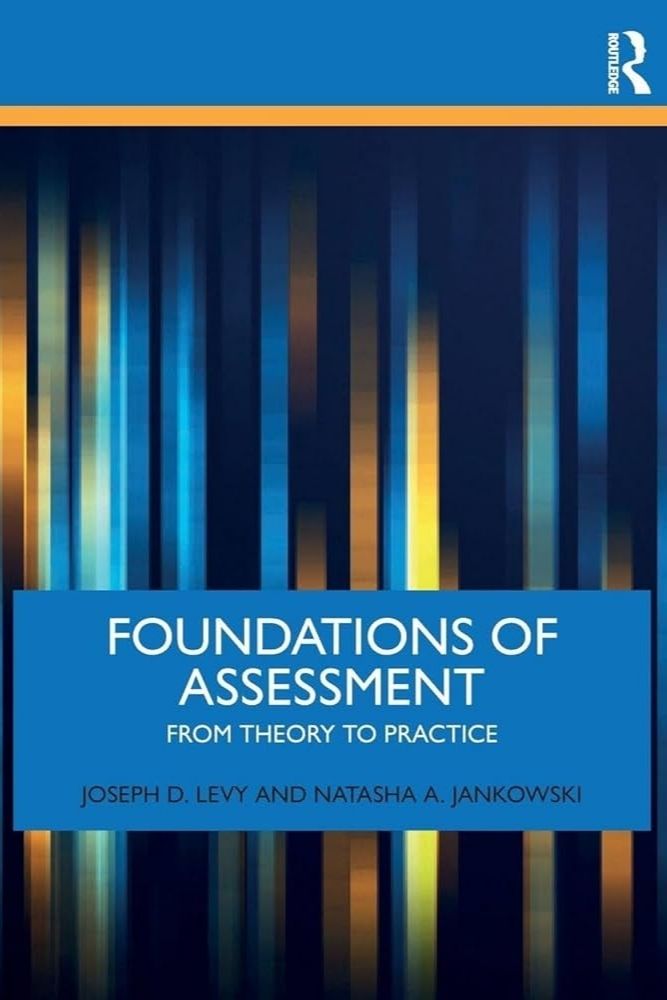
Foundations of Assessment (2026)
By Joseph D. Levy and Natasha A. Jankowski
Review by Sara Lazo, Searle Center Graduate Student Intern, Masters of Science in Higher Education Administration and Policy
In Foundations of Assessment: From Theory to Practice (2026), Joseph D. Levy and Natasha A. Jankowski present assessment as something far more meaningful than a compliance exercise. Instead, they emphasize a values-driven approach to assessing student learning, grounded in ongoing reflection on its purpose. By centering the “why,” they reframe assessment as a transformative practice, for improving student learning outcomes.
As a master’s student in Northwestern’s Higher Education Administration and Policy, I am greatly interested in how institutions can use assessment as a meaningful tool to support student success. In my previous role at MIT’s Office of Graduate Education, I experienced how university offices worked towards student success outcomes but had not yet seen how programs and departments collectively focused on that same goal. Through my time at Northwestern and internship with the Searle Center, I now have a greater understanding of the assessment cycle and the opportunities it provides for clear communication and collaboration between students, faculty, and staff.
While reading Foundations in Assessment, I was invited to listen in on an interview between co-author Joseph Levy and Lina Eskew, Senior Assistant Director of Assessment at the Searle Center. In their conversation, Levy described the book as a way to bring together the authors’ different voices and experiences in service of a broader conversation about student success. He shared that the book was inspired by a desire to bridge theory and practice, give greater attention to the history and philosophy of assessment, and integrate academic and student affairs perspectives. He and Jankowski also hoped to create a resource that would be useful to both practitioners and graduate students, while making assessment feel more approachable, collaborative, and impactful.
The authors bring this vision to life by tracing the history, methods, and real-world applications of assessment that support a sustained culture of continuous improvement in higher education. Emphasizing the purpose of assessment, they challenge decades of compliance-driven assessment culture in the U.S., demonstrating how an embedded culture of assessment can support the improvement of learning outcomes for all students.
A Brief History of Assessment in the U. S.
The first section of the book discusses the history of the assessment of student learning outcomes in the U.S. From the 1920s to the 1950s, there was a push to standardize testing, which was viewed as an objective measure of student talent used to assess knowledge and sort students based on their cognitive abilities. The expansion of higher education after World War II led to increased calls for accountability in student learning from the government, along with a greater emphasis on curriculum alignment and program-level assessment in the 1960s and 1970s, though assessment remained decentralized.
In the 1980s, a publication from the National Commission on Excellence in Education raised concerns about educational quality in the U.S., helping to intensify the accountability movement. In the early 2000s, critiques of standardized testing as perpetuating social inequality contributed to a growing focus on student success and equity in assessment, a movement that has become even more visible since 2020.
By charting these historical shifts in national approaches to assessment, from measurement to accountability to a stronger focus on student learning outcomes and equity, Levy and Jankowski demonstrate how the purpose of assessment has evolved over time, offering insight into the current emphasis on practices that are relevant and intentionally centered on students.
Collaboration is the Catalyst
Re-centering assessment on student success requires more than philosophical clarity; it requires structural intentionality that enables cross-collaboration at the individual, program, and institutional levels. A consistent theme throughout the book is the importance of partnership and broad campus engagement in the assessment process.
Because assessment is often used as decision support to inform action, incorporating multiple and diverse perspectives is essential for refining curriculum, teaching and learning strategies, and overall institutional policies related to student success. In doing so, institutions can use assessment data not only to guide decisions, but to engage partners in ongoing reflection and continuous improvement (p. 187). Levy and Jankowski extend this call for collaboration by emphasizing the importance of forming partnerships across campus that may not traditionally be included in assessment work, such as institutional research, information technology, and alumni relations.
Engaging a broader network of campus partners strengthens communication about the value of assessment, builds trust, and reinforces a shared commitment to improving student learning. Rather than positioning assessment as work that occurs in isolation, they describe it as a process that invites students, faculty, and staff to contribute their insights and interpretations throughout. From shaping shared understandings of learning outcomes to offering feedback on how assessment practices can be adapted, the inclusion of multiple perspectives becomes essential to meaningful and sustainable assessment.
Cultivating and Sustaining a Culture of Continuous Improvement through Reflection
Levy and Jankowski also remind readers that assessment is both a science and an art. They argue that building a healthy assessment culture requires more than implementing tools or collecting data; it requires embedding reflective practices, methods, and processes that enable intentional, data-informed decision-making. Data do not speak for themselves; they require thoughtful interpretation, attention to context, and collaborative dialogue to ensure that conclusions drawn from assessment results meaningfully inform teaching and learning.
The authors also foreground storytelling as a powerful tool for communicating the purpose and meaning of assessment, creating connection and engagement with a wide range of audiences. Through storytelling, faculty, staff, and students can better understand how assessment results connect to their experiences, strengthening engagement across the campus community.
Levy and Jankowski further encourage institutions to engage in “meta-assessment,” or reflection on the effectiveness of the assessment process itself. By examining whether methods, timelines, and practices generate meaningful insights about student learning, institutions can refine and strengthen their efforts. In this context, reflection is not a final step but an ongoing practice embedded throughout the process.
By setting aside time to examine the assessment process, individuals can consider how students are being centered and how assessment remains aligned with its core purpose: improving student learning. This reflection also helps us better understand our current assessment culture and identify ways to build a more sustainable and healthy culture within units and across Northwestern.
To support this work, Levy and Jankowski outline five core competencies for “culture builders” within institutions, who serve as connectors and facilitators, translating assessment findings into meaningful action while building relationships across the institution to sustain improvement efforts.
Five Culture Builders
- Strategic vision— Aligns goals with initiatives for growth and improvement by creating a forward-looking strategy
- Improvement planning—Uses assessment results to guide ongoing action and decision-making
- Storytelling—Communicates ideas in ways that engage a wide range of audiences
- Community Engagement—Cultivates relationships and serves as a catalyst for change across communities
- Adaptability—Remains responsive and flexible to evolving practices that best support students’ needs
Conclusion
Foundations of Assessment: From Theory to Practice is not just for assessment professionals; it is equally relevant to graduate students, faculty, staff and university leaders seeking to deepen their understanding of assessment. By exploring what assessment means at the individual, program, and institutional levels, Levy and Jankowski challenge readers to move away from a mandate-driven mindset toward an approach grounded in purpose, capacity building, and collaboration. Centering the purpose of assessment and cultivating a robust assessment culture can create ripple effects across the university. At its core, assessment is not only about documenting student learning but about advancing student success.
Published Tuesday, April 7, 2026.