Connor Bain
Fall 2026 Interview
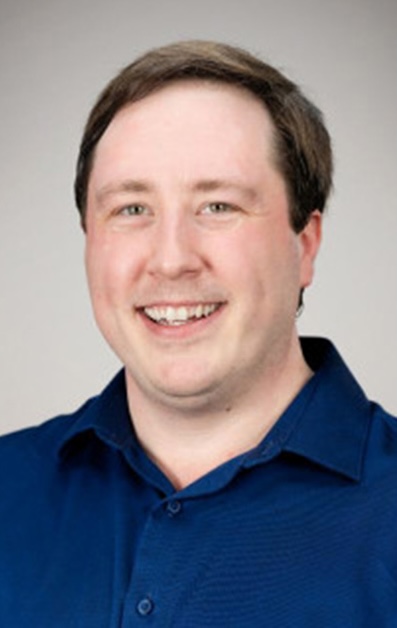
Connor Bain, PhD
Charles Deering McCormick Distinguished Professor of Instruction in Computer Science
Faculty Chair, Willard Residential College
By Laura Ferdinand, Assistant Director of Content and Communications
Bring up Connor Bain's name, and people light up. Amazing teacher! Amazing person! These sentiments were reflected last spring when he was honored with a University Teaching Award. I was lucky to converse with Connor over email in the days leading up to fall quarter, learning from his expertise at the intersection of computer and learning sciences. This is an excerpt from our exchange.
Last spring, you received a University Teaching Award. Congratulations on this honor! In your remarks at the awards ceremony, you spoke about helping students discover their passions by seeing the world in new ways. Can you share an educator, mentor, or experience that changed how you see the world and helped you discover your passions?
I’m not sure I can tie this back to any one person or event. It’s something I’ve always felt, but probably couldn’t have put into words until sometime in graduate school. Seymour Papert wrote a book called Mindstorms, and in the foreword, he talks about how as a kid he fell in love with mechanical gears. Because of this connection he felt with these gears, he found himself referring back to them again and again. He saw multiplication tables through the lens of differently sized gears. Algebra was just like a differential in a car. He saw them as an “object to think with” across all of his learning.
When I first ran into computer programming, though I hadn’t read any Papert back then, I felt a similar way. It was the funny business of translating what was in my head into a language the computer could understand. And in that process, it makes you examine every little detail. It forces you to make the abstract thoughts in your head into concrete statements. I see teaching the same way. It’s a process of translating the thoughts in your own head in a way that allows students to construct their own understandings using all of the stuff in their heads. Over the years, I’ve come to see those two things: computer science and teaching/learning as deeply intertwined.
To give a little context…originally, I intended to do a PhD in computer science, specifically theoretical computer science (the math behind CS). As I was researching graduate programs, I checked out Northwestern's CS department (mostly because my parents were NU alums) and didn’t find anyone in my particular research area…but did find two CS professor cross listed in something called the “learning sciences.”
My main motivator for getting a PhD was to become a teacher, and learning was something I was already quite interested in, so I started to learn a little more about what the learning sciences was. After doing some research, I found a bunch of work already being done at NU at the intersection of computer science and education and specifically people interested in the process of learning to program. I wondered if maybe this was a better match for me given my goals and interests. I applied for the PhD in learning sciences and, in the process, found out that the department was looking to start a joint PhD program between LS and CS. It sort of felt like being a weirdly shaped jigsaw piece that finally found a puzzle that had a space for me. And now I’ve been here since 2015!
Both of your parents are educators and Northwestern alumni. How did growing up in a family of teachers shape your views on learning and teaching? Are there particular lessons, values, or conversations with them that still influence your work today?
My grandfather was a theatre professor at the University of Notre Dame for many years. My Dad is a professor of music at the University of South Carolina. Though they both were in very different fields, I think the key idea they both shared was being curious. Curious about not just their fields, but the world around us. Learning wasn’t just something that happened in a classroom, it’s something that happens in every tiny interaction we have with others and the world around us. I had the privilege of being able to see that on display every day. That a university could be a place to learn and work. That being a teacher could be a career (though no one in my family ever said I needed to be or even go to graduate school for that matter).
I think also perhaps less directly connected, because they were both in the arts (my mom is also a musician), I came to see performance as more than just art. It was an attempt to communicate meaning and artistic intent both directly and indirectly to the audience. That might be a little more open-ended than teaching, but they share a remarkably similar core.
Your research has long explored the intersection of student learning, computer science, and AI in education. In an era when generative AI tools are readily available to students, what lessons from your research feel most relevant today?
My main research goal in my work has always been about empowering students and teachers with computational ideas. In earlier efforts, the democratization of computation relied on introducing as many people as we could to the art (and science) of programming. These days, with LLM-based tools, even someone who has never seen a line of code in their lives can quickly build a system that automates some task they find interesting / meaningful in their own lives. But it is also so tempting to surrender to these tools that which makes us human: our interests, our curiosities, and our struggles to learn the things we are passionate about.
Learning is a messy process. It always has been. We learn by challenging ourselves, by pushing ourselves (or our students) past the precipice of the familiar and the comfortable. Learning to take that leap, learning what the landing feels like, learning what it means to stand back up afterwards—these are important steps! It’s not so different from the concept of muscle memory.
Easy access to information and now easy access to synthesis has quickly started to change the way people interact with knowledge and learning. While I hope that will be a benefit for all (though history shows that’s not typically the case across those of differing identities, socioeconomic status, background, etc.), I worry too that knowing how to struggle to learn might be lost; that we will expect perfection far too early than is reasonable of a person still learning; that we will sacrifice learning fundamentals in favor of trying to rush to the end product.
Learning is messy. It isn’t always neatly summarized in bullet points and the journey is just as important (if not more) than the product.
You have extensive experience coordinating large courses, often serving hundreds of students at a time. What are some of the most important lessons you've learned about creating meaningful learning experiences at scale? How do you balance logistics with connection, and what strategies help students feel seen in large classes?
When I first started teaching large courses, I wanted things to be as smooth as possible. I focused on mechanics of classes, wrote really long instructions, made sure everything was straight forward. Over the years I’ve found that while smoothness is very valuable (organization and process help students focus on the learning objectives rather than the learning logistics), there’s a very fine line between classroom and “machine.” What I don’t want is students to feel like they’re just in the cogs of a machine, being pushed along a particular line to the same endpoint.
Over time, I’ve tried, even in really big classes, to have open-ended assignments, opportunities for creative expression, and time to talk about your interests. In the Searle Fellows program, I worked to integrate the idea that programs, like essays, aren’t done the moment their “complete.” We have to step back, critique, gather feedback, and jump back in and make edits.
Additionally, I think it’s important to provide students with the opportunity to avoid me or see me depending on how they feel. Sometimes students want to take a larger class, do the work, and learn the material while staying “anonymous.” Other students want to have that more personal connection. Over time, I’ve decided that both ends of the spectrum are totally fine and a large class can have students across that entire spectrum. The key is to make it so that a student can pivot their approach if they feel it necessary throughout the quarter.
As Faculty Chair of Willard Residential College, you've gained another perspective on undergraduate life beyond the classroom. What have Northwestern students taught you recently? Are there any themes, priorities, or concerns that stand out to you when it comes to learning, belonging, or preparing for the future?
Willard is very special to me because when I was a graduate student here at NU, I felt very disconnected from the greater university community. I had my lab mates, the other students in my program, the students in my SESP Statistics discussions, but I hadn’t ever really felt like part “Northwestern” as a whole.
One day I randomly saw an email about becoming a graduate assistant in a residential college and applied. I ended up at Willard (way back in 2018) and have been part of the community ever since. The students there reminded me of what a special place a university is and what an amazing place Northwestern specifically is: a place where we can all come together to learn (and for the students live).
Willard residents constantly remind me how much I love to learn things that I never expected to learn about (or never even considered) and how important learning is across and throughout our lives. You never know where you’ll find community and connection and you’ll never know where you might learn something that changes how you see the world.
Published October 6, 2026