Vigil Learning & Teaching Guide
Introduction
By Greg Siering, PhD, Director of Pedagogy and Curricular Development, Searle Center for Advancing Learning and Teaching
Northwestern’s campus reading program is an opportunity for the entire university community to come together in shared intellectual experiences in both academic and co-curricular settings. By engaging our students in vibrant exchanges of ideas around a common text, we promote the richness of a Northwestern education that actively seeks to explore meaningful issues in varied and collaborative ways.
Building on twenty years of success of One Book One Northwestern, this enduring part of Northwestern’s culture is being re-envisioned by the Litowitz Center for Enlightened Disagreement as a way of addressing one of the greatest challenges of our time—our ability to reach out across intellectual and ideological differences to engage in enlightened disagreement that can advance our institution and our culture.
Campus reading programs are particularly well positioned to support integrative learning because they create shared points of reference that students encounter across courses, programs, residence halls, campus events, and informal conversations. As Laufgraben observes, “By intentionally creating this relationship between the curricular and co-curricular components of the common reading program, the gap between students’ in- and out-of-classroom learning is narrowed and learning is deepened” (2006, p. 73).
A shared campus reading is a powerful way to model our academic community’s commitment to cultivating habits of mind, including intellectual curiosity, critical inquiry, perspective-taking, boundary crossing, openness to new experiences, and continuous reflection.
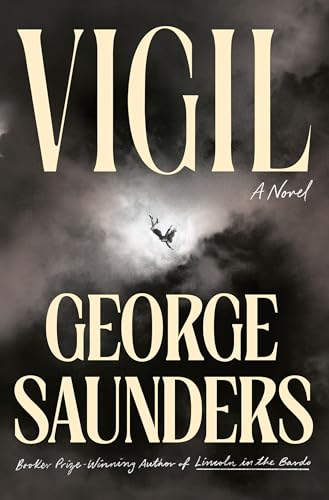 This guide has been created as a pedagogical resource to spark interest among instructors and other facilitators, to build institutional capacity for facilitating learning through a common reading, and to extend the reach and impact of the Campus Reading Program sponsored by the Litowitz Center for Enlightened Disagreement. Our vision is that these frameworks, questions, and resources will lead to robust and rewarding discussions about Vigil across our Northwestern community.
If you are considering ways to integrate the campus reading into a course, program, or co-curricular initiative, we invite you to connect with the Searle Center. Our educational developers can partner with you to explore course design, student engagement, assessment, and curricular integration, helping align the campus reading with your learning outcomes. We also welcome collaborations with departments and programs seeking to create more engaged learning experiences across Northwestern.
Content Note
By Veronica Womack, PhD, Associate Director of High-Impact Teaching, Searle Center for Advancing Learning and Teaching
Vigil includes depictions of terminal illness, sexual violence, and body decomposition. As part of the University’s commitment to the Northwestern Principles of Inclusive Teaching, we underscore the importance of creating a community of care that safeguards mental and emotional well-being as learners engage with thought-provoking content.
When approaching potentially sensitive content, readers are encouraged to exercise self-care. Special education practitioners Nordman and Adcock (2023) offer techniques of emotional regulation while reading, such as:
- Anchor yourself by thinking of the last time you read something challenging yet meaningful.
- Give yourself a relaxation break with deep breathing or stretching.
- Periodically check in by identifying specific feelings, like frustration, and allow space to creatively express yourself through activities which may include journaling and drawing.
In the spirit of cultivating a relationship rich environment, we have identified relevant, confidential campus resources:
Primer on Enlightened Disagreement
By Brad Zakarin, PhD, Curriculum Director, Litowitz Center for Enlightened Disagreement
The Litowitz Center for Enlightened Disagreement is grounded in a simple but powerful premise: disagreement, when approached thoughtfully, is not a problem to eliminate but a resource to harness. Across domains ranging from business and politics to higher education and civic life, differences in perspectives can fuel innovation, sharpen thinking, and reveal solutions that would otherwise remain hidden. Yet in an era of rising polarization, individuals and institutions often lack the tools to engage productively across those differences. The Litowitz Center seeks to fill this gap by developing and disseminating practices that enable disagreement to become a force for understanding, innovation, and progress.
The Center advances a holistic, research-driven approach to what it defines as enlightened disagreement: a principled mode of engagement that emphasizes equal standing over hierarchy, comprehension over caricature, and persuasion over coercion. Rather than prioritizing consensus or “winning,” enlightened disagreement focuses on improving how people think together by encouraging intellectual humility, accurate understanding of opposing views, and influence through reasoned arguments. This approach is explicitly nonpartisan and grounded in scientific inquiry, reflecting the Center’s commitment to identifying the most effective ways to navigate moral and epistemic differences.
Ultimately, the Center’s mission is to help individuals and societies flourish not despite their differences but because of them, demonstrating that disagreement can serve as a catalyst for deeper understanding and meaningful progress.
Enlightened Disagreement Themes in Vigil
In support of the Litowitz Center’s mission of transforming how we engage across divides, we offer some broad questions to explore how themes of enlightened disagreement appear in the novel.
- When do characters embody or fall short of the principle of embracing curiosity over caricature of others? How does this shape their thinking and the plot?
- How do tensions between hierarchy and equal standing manifest as characters interact? What opportunities for understanding are missed or seized?
- Why do characters rely on coercion or persuasion in different moments to express their perspectives or advance their purposes? What are the consequences?
Pedagogy
Making Northwestern’s Campus Reading a High-Impact Educational Practice
By Jennifer Keys, PhD, Senior Director of The Searle Center for Advancing Learning and Teaching | Professor of Practice in Sociology
The Campus Reading Program offers—on a smaller scale than a core curriculum—a type of “common intellectual experience,” which has been identified as one of twelve high-impact practices (HIPs). Based on empirical research championed by the American Association of Colleges & Universities, HIPs have been shown to have a positive impact on student engagement, learning, and persistence, with especially significant gains for students whose demographic backgrounds have been historically underserved by higher education. As Kuh (2008) notes, high-impact practices typically require considerable time and effort, meaningful interactions with instructors and peers, engagement with diverse perspectives, and frequent, substantive feedback.
A campus reading becomes a high-impact educational practice not simply because members of a community read the same text, but because educators intentionally design learning experiences around that shared text. The educational impact of the experience depends less on participation alone than on how the text is integrated into courses, programs, and co-curricular learning opportunities.
Importantly, instructors and facilitators need not approach the campus reading primarily as a work of literature. Its value lies in its ability to spark inquiry and conversation that can be connected to a broad range of learning outcomes, including communication, ethical reasoning, intercultural understanding, civic engagement, professional practice, leadership, identity development, and the evaluation of evidence and competing viewpoints. The Litowitz Center's focus on enlightened disagreement invites learners to use the common reading as a shared context for engaging differences with intellectual humility, evidence-informed reasoning, and a commitment to understanding other perspectives. It can also invite students to wrestle with complex or "wicked" problems, connecting ideas from the text to contemporary challenges across curricular, co-curricular, and civic contexts.
Pedagogical Strategies
With the shared goal of transforming encounters with the campus reading into learning experiences that are more engaging, connected, and impactful, instructors and facilitators can consider the following pedagogical strategies inspired by Moore's (2021)
Key Practices for Fostering Engaged Learning.
- Activate prior knowledge and experience by inviting learners to create a concept map that visually connects themes from the book to concepts, challenges, or questions within a discipline, profession, or area of practice. The guiding question “What do I already know?” helps students identify the experiences, assumptions, and prior knowledge they bring to the text.
- Facilitate perspective-taking and dialogue by incorporating low-stakes strategies from Angelo and Zakrajsek’s (2024) Classroom Assessment Techniques, such as “invented dialogue,” which asks learners to synthesize their understanding in the form of an imagined dialogue between characters or perspectives. The question “How might others see this differently?” encourages participants to examine how different individuals might interpret the same situation, evidence, or experience.
- Scaffold reflection and metacognition by inviting learners to examine how their thinking evolves through questions such as: How did you approach this reading assignment? Where did you struggle? Did any passages trigger an emotional response? What perspectives were unfamiliar to you? What challenged your thinking? How does your background shape your understanding of the characters? What questions remain unresolved? Encouraging learners to consider “How has my thinking changed?” promotes greater awareness of assumptions, learning processes, and intellectual growth.
- Promote the application and transfer of knowledge by asking students to imagine they have been appointed to an advisory board charged with responding to a contemporary challenge reflected in the text. Drawing on course concepts and disciplinary perspectives, students develop recommendations, evaluate competing priorities, and justify their decisions using evidence and reasoned argument. The focus shifts to “How would I use these ideas in practice?” as learners connect insights from the campus reading to real-world contexts and decision-making.
As Moore observes, “Engaged learning entails students actively and intentionally participating in their own learning, not only at discrete moments, but rather as an ongoing, lifelong activity” (p. 3).
Additional Resources
Angelo, Thomas A., and Todd D. Zakrajsek. Classroom Assessment Techniques: Formative Feedback Tools for College and University Teachers. 3rd ed. San Francisco, CA: Jossey-Bass, 2024.
Kuh, George D. (2008). High-Impact Educational Practices: What They Are, Who Has Access to Them, and Why They Matter. Association of American Colleges & Universities.
Moore, Jessie L. “Key Practices for Fostering Engaged Learning.” Change 53, no. 6 (2021): 12–18.
Sample Discussion Questions
Building on Northwestern’s strong tradition of interdisciplinary study and thought, we encourage instructors across the university to consider both how our disciplinary lenses can enrich engagement with this novel, and how the novel lets us explore our disciplines in unique and humanizing ways. Good literature lets us think in creative and expansive ways about our worlds, so we offer here some sample questions from a variety of disciplines as discussion starters, along with some excerpts to help add context for the questions. For those facilitating discussions of Vigil outside of academic settings, many of these questions may still be valuable for prompting rich conversations.
Humanities
By Greg Siering, PhD, Director of Pedagogy and Curricular Development, Searle Center for Advancing Learning and Teaching
Approaching Vigil from the perspective of the humanities allows readers to use the themes and metaphors in the novel to explore and critique elements of our culture. By analyzing the novel through lenses like philosophy, communication, history, gender studies, religious studies, and the arts, readers can explore how individual human choices impact global systems and generations, how we define ourselves and our agency in life, and how we practice empathy and relate to others.
- The myth of the self-made titan: Boone views his life through the classic mid-century American narrative of individual success, job creation, and conquering nature. How does the novel map the transition of the "American Dream" into a contemporary planetary crisis? How does it challenge our notions of “greatness” and who gets remembered?
- Changing views of progress and ethics: Boone grew up in rural Wyoming and built his empire on the 20th-century ideal of extracting oil to power human civilization. He genuinely views his life as a triumph of human ingenuity over a harsh world. How do changing cultural definitions of "progress" alter how we judge historical and literary figures? Is it ethically fair to judge Boone’s mid-century choices by our modern environmental standards, or does Saunders’ novel argue that some harms—like corporate deception—are morally wrong across any era?
- Challenges to perspectives on death: Saunders names the book Vigil, but instead of engaging in sacred watchfulness, the characters in the room are distracted by money, power, and their own political/social agendas. How does the novel challenge rituals of death and mourning, politicizing atonement and challenging the notion of a comforting vigil? Can we retain a more pure, comforting vigil in an increasingly complex and politicized world?
- Surrealism as literary/artistic tool: Saunders paints a surrealistic and sometimes slapstick image of Boone’s final hours—swarming birds, manifested victims of climate change, bantering ghosts, and (ahem) posteriorly-nested ghosts. While these surreal elements might be chalked up to the last moments of a dying mind, why does Saunders choose surrealism (and absurd “gross-out” humor) instead of realistic fiction to tell this story? What does this narrative style do that regular biography could not? If this story were represented in different arts—from visual arts to music to theatre—how might their own approaches to surrealism or the absurd support a narrative of Boone’s struggle at the end of his life?
Social Sciences
By Jennifer Keys, PhD, Senior Director of The Searle Center for Advancing Learning and Teaching | Professor of Practice in Sociology
A pedagogical challenge—and opportunity—in teaching Vigil is helping students move beyond immediate judgments of wrongdoing. Students will likely recognize harm quickly and readily locate responsibility for it. The more difficult task is understanding that harm through the kinds of questions social scientists ask: how it is produced, justified, distributed, contested, and sustained. Different frameworks may illuminate one aspect of the problem while obscuring another, and the productive struggle lies in examining competing explanations without rushing toward resolution.
The order of the questions is designed to support a gradual widening of perspective—from individual actions and experiences to broader questions of power, institutions, and social change.
Structure and Agency
How are actions shaped by forces larger than the individual?
Excerpt
My charge had been born him. But had never chosen to be born him. That had just happened to him. Then life had happened to that him, exerting upon it certain deleterious effects, including but not limited to: the powerful nature of his early desires, which had led him to strive, which, in turn, led him to accomplish, and in accomplishing, he had brought about harm, even as the mind he'd been given, from the start, bloomed forth, just as it must, causing him, in the face of that harm (and the accusations made against him due to that harm), to suppress and deny the reality of the harm and become, over time, averse to even acknowledging it.
It had all unscrolled just as it must.
It did not seem strange to me, but inevitable.
An inevitable occurrence upon which it would be ludicrous to pass judgement.
And yet judgement was being passed.
Most harshly.
(p. 165)
- Jill reflects on Boone's life as though it unfolded according to forces that preceded his own decisions, leading her to view many of his actions as "inevitable." To what extent does Boone appear to be making choices freely, and what does "inevitable" seem to mean in the context of his life?
- What social, economic, cultural, or organizational forces shape Boone's actions throughout the novel? Consider industry norms, expectations of growth, responsibilities to investors and employees, family influences, or broader cultural ideas about success and achievement.
- How does the novel complicate our understanding of responsibility when actions are shaped by pressures that feel both external and, at times, unavoidable? Does recognizing these constraints change how we think about accountability?
Identity, Memory, and Justification
What stories do people tell about themselves?
Stability of Worldviews
- What does Boone rely on to maintain a coherent understanding of himself?
- Where do competing versions of reality enter the text, and why do they fail to displace his worldview?
- What seems most at stake for Boone when his understanding of himself is challenged?
Narrative, Memory, and Legacy Formation
- How does Boone organize his life into a story that feels meaningful or defensible, and what does that story seem designed to protect?
- Where does Boone's memory condense, soften, or revise events, and what purpose might those revisions serve?
- How does Boone's account of his life compare with other perspectives in the novel, and what does that suggest about how legacies are constructed?
Justification and Self-Explanation
- How does Boone account for his actions, and how do those explanations shift as he is confronted by Jill, the Frenchman, and others?
- Where does Boone rely on broader cultural narratives about success, effort, achievement, or contribution?
- Where do his explanations begin to strain, repeat, or harden?
- Boone frequently describes himself as a "responsible corporate steward." How does that role shape his understanding of responsibility? What tensions emerge between organizational obligations and broader social responsibilities?
Social Roles, Systems, and Inequality
How are harms produced, distributed, recognized, and sustained?
Gender, Roles, and Social Expectations
- Jill died in the 1970s and carried the nickname "Doll," reflecting a period shaped by different expectations regarding gender, care, and authority. How do those expectations continue to shape her role in the novel?
- How do gender expectations shape the ways characters understand their responsibilities, opportunities, and obligations?
- What assumptions about care, authority, expertise, or emotional labor become visible through these interactions?
- How do expectations of loyalty, emotional support, and femininity within Boone's family influence his daughter's response to learning about her father's environmental impact? Why is she able to question him but not fully blame him?
Belief, Recognition, and Change
- The Frenchman presents what looks like overwhelming evidence—records, histories, consequences. Why does this not produce recognition for Boone?
- Jill's approach is very different: less about proving and more about guiding or easing distress. What does her approach make possible—or limit—that the Frenchman's does not?
- What other forms of evidence appear throughout the novel—experiential, emotional, empirical? What do these encounters suggest about how change happens—or fails to happen?
Production, Distribution, and Persistence of Harm
- What harms connected to Boone's work are made visible in the novel, and who seems most exposed to those consequences?
- How are those harms distanced from Boone—geographically, economically, or socially—and how does that distance shape what he recognizes or fails to recognize?
- What suggests that these harms would continue even without Boone specifically? What larger systems, dependencies, or patterns keep them in motion?
Visibility, Distance, and Systemic Inequalities
- Whose suffering do we see clearly in the novel, and whose is harder to notice?
- What kinds of harm are easiest to recognize—immediate, visible, and personal—and which remain distant, diffuse, or unfolding over time?
- Who tends to bear the consequences of major decisions, and how visible are those consequences to those making them?
- Saunders transforms Boone's bedroom into a surreal manifestation of distant harms and consequences. How does this image challenge the tendency to separate personal comfort from the social, environmental, and economic systems that sustain it? If your own living space revealed those hidden relationships, what stories might it tell?
Value, Measurement, and What Gets Left Out
- If you were studying Boone's world as a sociologist, political scientist, or anthropologist, what kinds of data would you want to collect?
- Where do we see impacts—environmental, human, or nonhuman—that do not translate easily into what can be counted, compared, or incorporated into policy decisions?
- If policymakers had to act based solely on the available data, what would likely be prioritized—and what would be left out?
Applying and Extending the Analysis
New Technologies, Enduring Questions
- If Boone were the architect of a powerful technology such as artificial intelligence rather than an oil executive, what would change about how harm is produced, distributed, or recognized? What would remain the same?
- How might AI-related harms differ in their visibility—more immediate or more hidden, more measurable or more diffuse? Who would be most affected, and how would that be known?
- In a world where harms are increasingly difficult to see, measure, or trace to a single actor, what does it mean to remain attentive or responsible to one another? What, if anything, still feels possible in terms of care, accountability, or shared humanity?
STEM
By Daisy Haas, PhD, Assistant Director of STEM Education, Searle Center for Advancing Learning and Teaching
A key driver of George Saunders’ Vigil is the potential role oil magnate K. J. Boone has played in environmental degradation, which opens the novel up for discussions of environmental and scientific ethics, as well as the nature of science and the role it plays in society. The novel can act as a fictionalized case study for exploring these and other issues that are relevant to students exploring their roles as future scientists, engineers, and users of scientific knowledge.
We offer below a few excerpts that provide focused context for some STEM-related questions.
In this excerpt from Vigil, R and G are ghosts who are urging Boone not to admit wrongdoing and vigorously rationalize and justify his (and their) actions.
[Is it] Lying when a person uses his considerable reputation and his mastery of public communication to thrash his opponents by redirecting the attention of the general populace, thus infecting the people with the tiniest sliver of doubt, which, widely propagated, becomes a sizable wedge of doubt? said G.
Doesn’t every idea, said R., even those judged by some standards to be fallacious or those which have been disproven outright, deserve to be honored with the public’s attention?
Doesn’t the public have the right to know? said G.
And decide for itself? said R.
Are you calling the public stupid? said G.
Do you not believe in democracy? said R.
We [G and R] were, in life, eminent scientists, he said.
(pg. 60-61)
- In this excerpt, a character named R describes some ideas as “disproven outright.” Who gets to decide when something counts as "proven" or “disproven” in science? Is it other scientists (peer review)? Funding agencies? The media? The public? What kinds of data or evidence do we rely on and how might the general public receive that information?
- Do scientists have to respond to ideas they know are wrong or have already been disproven? Why? And to what extent?
In this excerpt, G and R defend the idea that ideas, even those fallacious or disproven, "deserve" public attention and a response from scientists. Consider a current example (anti-vaccine claims, flat-earth arguments, climate change denial, etc.). What happens if scientists ignore a disproven idea versus if they engage with it directly?
- What strategies for responding to this kind of rhetoric have actually worked, and which haven't?
(Consider the framework of “enlightened disagreement" or engaging the substance of a disagreement honestly rather than dismissing it, outright.) What are examples of scientists successfully changing public opinion or behavior? What are examples where the attempt backfired or made the divide worse?
- Do scientists have a responsibility to think ahead about how their work might be politicized?
Some areas of scientific research (vaccines, climate, evolution, GMOs) become almost immediately politically charged. Should scientists anticipate this before publishing or communicating their work? If so, how might that change what they do or say?
In this excerpt, two characters, both dead—“The Frenchman” and Jill “Doll” Blaine—discuss their view of the engine. Between them, the engine is not just a scientific invention, but holds the histories of cultural, social, economic, and environmental change.
Do not mock me, he [the Frenchman] said. My shame is well-founded. See for yourself.
He skim-popped me lightly across the head with the palm of his hand.
And just like that, I was him, briefly, the Frenchman, in a mechanic’s jumper, crouching before some sort of metal contraption in a squalid barn smelling of cow dung and gasoline. With a bang, the thing went off. From one end protruded a metal claw which suddenly started turning. Oily smoke from the contraption poured forth from the barn, drifting over nearby meadow lush with wildflowers, where I would sometimes go to sit against a boulder while working through a particularly difficult engineering problem.
I had done it.
Triomphe! I had done it!
Wait, I said. You invented the engine?
To my shame, yes, he said.
Well, I beg to differ, I said.
For me? Former me? Jill “Doll” Blaine? My auto, my car? My “lime-green” Chevelle? In those bygone days? In “Stanley, Indiana”? Had been a source of such happiness. To get in it when it was new, a gift from “Dad,” and drive around town, and have the other kids notice, and wave? At me? Former big nobody? To cruise, on a Friday night, down Pope Street, in that wonderful new-car smell, and join the long line of other gleaming cars, all filled with kids from school, and park at the Aurora for Cokes, then slowly cruise back out, to wave at and flirt with boys who, in real life, I would never even have dreamed speaking to?
And he, the Frenchman, had played a part in that?
In making thousands, maybe millions, of young teens happy?
Not to mention: family vacations, ambulances, trucks delivering all sorts of wonderful things to people all over town who needed them?
You don’t understand, he said.
I’m afraid I don’t, I said.
It poisons, madame, he said. I did not know it then. But I know it now. I have been corrected. As he [the dying oil tycoon] must be. And you? You are here to help. To help me. Help me correct him. Which you will do. Make no mistake.
(pp. 27-28)
- What are some examples of scientific innovations that have been done with seemingly good intentions or impacts, but that have also had harmful consequences? The Frenchman says that he “did not know it then. But I know it now.” about the idea that his invention of the engine poisons. What happens when we innovate without knowing the implications of our work?
- What are scientists’ responsibilities and duties to consider the consequences of their scientific discoveries? What kind of ethical considerations are commonly discussed for innovation? Are there more considerations that should be taken into account? Less?
- How might the harms and the benefits of scientific invention be weighed? The Frenchman views his invention, the engine, as a point of “shame” describing that the engine “poisons.” Jill “Doll” Blaine seems to view the engine with admiration, “making thousands, maybe millions of young teens happy.” She then lists other social and economic improvements: family vacations, ambulances, and deliveries. Is there a framework you use for making sense of risk in scientific innovation?
- Put yourself in the position of the Frenchman. If you could go back in time, would you change what you had done? Would you not make the engine at all? Would you create some kind of policy or ethical boundaries? Would that do anything at all? Dream up some possibilities.
Reading Beyond Vigil: Companion Texts and Resources
By Maj Kargbo, PhD, Director of Education, Office of Community Enrichment
A common read is rarely the end of a conversation—it is the beginning of one. While Vigil offers a shared narrative through which readers can explore questions of responsibility, persuasion, power, and moral judgment, no single work can fully encompass the complexity of these themes. Reading across multiple texts, disciplines, and artistic forms allows us to encounter different ways of asking questions, different assumptions about what matters, and different visions of what accountability, repair, and collective life might require.
The resources below are offered in that spirit. Rather than serving as explanations or correctives to Vigil, they invite readers to place the novel in conversation with other works that illuminate complementary perspectives. Some expand the novel’s interest in persuasion and disagreement; others foreground structural forces, collective responsibility, environmental justice, scientific ethics, or the imaginative work of envisioning different futures. Together, they encourage readers to move between literature, social inquiry, scientific thinking, visual culture, and public life.
This approach also connects with the Office of Community Enrichment Education Team’s 2026–27 theme, Imagining Towards…, which invites the Northwestern community to treat imagination not simply as escape or speculation, but as a practical tool for questioning what appears inevitable and rehearsing more responsive ways of living, learning, and acting together. Read through this lens, Vigil can become a starting point for asking not only how harm is recognized, but what different relationships, institutions, technologies, and collective practices might prevent it, repair it, or make other futures possible.
Whether used in a classroom, residence hall, student organization, staff program, or informal reading group, these pairings are intended to support one of the central aspirations of a shared intellectual experience: not simply to arrive at common conclusions, but to cultivate richer questions by reading broadly, critically, and across disciplinary boundaries.
The OCE Education Team is available to collaborate with instructors, departments, student-facing programs, and campus partners interested in extending these conversations. The team can offer thought partnership on companion materials, discussion questions, interdisciplinary learning activities, asynchronous resources, and facilitated or self-guided experiences connected to Vigil and Imagining Towards…
Reading Beyond Vigil: Conversations to Continue
The companion works below offer different ways to extend the questions raised by Vigil. The questions are invitations: readers and facilitators might select one or two that best fit their context rather than attempting to address them all.
Humanities
Table of recommended materials outlining connections to Vigil.
|
Companion work
|
Why pair it with Vigil?
|
Questions to carry forward
|
|
Ursula K. Le Guin, “The Ones Who Walk Away from Omelas”
|
Moves the conversation from one person’s conscience to a society’s willingness to benefit from hidden suffering. The story sharpens questions about complicity, comfort, and the moral adequacy of simply refusing to participate.
|
Who benefits, and who bears the cost? Is walking away a meaningful ethical response? What would changing Omelas require?
|
|
N. K. Jemisin, “The Ones Who Stay and Fight”
|
Responds to Le Guin by imagining responsibility as active participation in building and defending a different social order. It shifts attention from withdrawal toward the difficult work of collective change.
|
What responsibilities accompany the decision to stay? When does protecting a community become coercive? Can a just society exist without continually confronting injustice?
|
|
Octavia E. Butler, Parable of the Sower
|
Shifts the focus from looking backward at irreversible harm to organizing, adapting, and creating community amid crisis. Butler treats imagination not as escape, but as a practical survival skill.
|
What makes collective survival possible? How do people create shared purpose under pressure? When familiar institutions fail, what should replace them?
|
|
Toni Morrison, “Recitatif”
|
Exposes how readers fill uncertainty with assumptions about identity, innocence, injury, and blame. It provides a powerful way to examine caricature not only between characters, but within the reader’s own interpretive habits.
|
What assumptions do we make when information is withheld? How do memory and self-interest shape accounts of harm? What would it mean to remain curious without avoiding judgment?
|
|
Robin Wall Kimmerer, The Serviceberry
|
Offers reciprocity, gratitude, and mutual responsibility as alternatives to extraction. It moves the conversation beyond recognizing harm toward imagining relationships and economies that do not depend upon exploitation.
|
What would an economy organized around reciprocity value? How does receiving something create responsibility? What practices could make interdependence more visible?
|
|
Film: The Act of Killing
|
Confronts the limits of confession, spectacle, and remorse after mass violence. The film complicates the assumption that witnessing a perpetrator recognize—or perform recognition of—harm necessarily produces accountability.
|
What is the difference between acknowledgment and accountability? Who benefits when attention centers on the perpetrator’s feelings? Can representation expose violence without reproducing it?
|
|
Film: How to Blow Up a Pipeline
|
Pushes the question of persuasion toward the contested boundary between protest, property destruction, and political violence. It asks what options remain when institutions repeatedly fail to respond to evidence and conventional advocacy.
|
When does persuasion cease to be adequate? Who gets to define violence and legitimacy? How should urgency affect judgments about political action?
|
|
Susan Sontag, Regarding the Pain of Others, selected excerpt
|
Complicates the belief that seeing suffering naturally produces understanding, empathy, or action. Sontag helps readers examine the distance between witnessing harm and accepting responsibility for it.
|
What does witnessing ask of us? When do images clarify suffering, and when do they turn it into spectacle? Why might knowledge of harm fail to produce action?
|
Social Sciences
Table of recommended materials outlining connections to Vigil.
|
Companion work
|
Why pair it with Vigil?
|
Questions to carry forward
|
|
Rob Nixon, Slow Violence and the Environmentalism of the Poor
|
Makes visible forms of harm that are gradual, dispersed, and difficult to trace to a single moment or actor. It shifts attention from dramatic reckoning toward the social and political conditions that allow environmental damage to accumulate.
|
Why are some harms easier to recognize than others? Who bears the consequences of delayed or geographically distant decisions? How can accountability address damage that unfolds across generations?
|
|
Mariame Kaba, We Do This ’Til We Free Us
|
Distinguishes accountability and transformation from punishment, confession, or personal redemption. Kaba redirects attention toward the relationships, resources, and collective practices required to prevent harm and support repair.
|
What does accountability require beyond remorse? How can communities respond to harm without reproducing it? What conditions make transformation possible?
|
|
Olúfẹ́mi O. Táíwò, Elite Capture
|
Examines how the language of justice and social change can be absorbed by powerful people and institutions without altering material conditions. It helps readers distinguish meaningful transformation from symbolic alignment.
|
Who controls the terms of a public conversation? When does inclusive language conceal unequal power? How can an idea remain accountable to the people and conditions from which it emerged?
|
|
Robyn Maynard and Leanne Betasamosake Simpson, Rehearsals for Living
|
Models an exchange across distinct intellectual and political traditions without erasing differences in history, power, or experience. It connects crisis analysis to the imaginative work of rehearsing more livable futures.
|
What makes dialogue across difference generative rather than flattening? How can people build solidarity without claiming identical experiences? What futures are already being rehearsed in the present?
|
|
Naomi Oreskes and Erik M. Conway, Merchants of Doubt
|
Shows how disagreement can be deliberately manufactured to obstruct action. It offers an important distinction between good-faith intellectual contestation and strategies that exploit uncertainty, expertise, and public trust.
|
When is skepticism intellectually responsible, and when is it strategic delay? Does every claim deserve equal public attention? What responsibilities accompany scientific or professional expertise?
|
|
Film: Dark Waters
|
Grounds environmental harm in legal evidence, institutional secrecy, regulatory failure, and sustained organizing. It moves the conversation from a powerful individual’s conscience to the infrastructures required to document harm and pursue accountability.
|
What makes hidden harm publicly legible? Why can overwhelming evidence still fail to produce timely action? What kinds of persistence and collective support does accountability require?
|
|
Arlie Russell Hochschild, Strangers in Their Own Land
|
Explores how political identities are shaped by emotion, narrative, belonging, and perceived recognition. It offers a framework for understanding another person’s worldview while leaving open questions about the limits of empathy.
|
What can understanding another person’s “deep story” make possible? When might empathy obscure power or consequence? How can curiosity coexist with moral and political judgment?
|
|
Keeanga-Yamahtta Taylor, Race for Profit
|
Demonstrates how exploitation can be produced through policy, markets, and public-private systems rather than through one clearly identifiable wrongdoer. It offers a structural account of harm that exceeds narratives of individual intention.
|
How do policies distribute benefit and risk? What happens when exploitation is presented as opportunity? Where should responsibility be located when harm emerges from an entire institutional system?
|
STEM
Table of recommended materials outlining connections to Vigil.
|
Companion work
|
Why pair it with Vigil?
|
Questions to carry forward
|
|
Langdon Winner, “Do Artifacts Have Politics?”
|
Challenges the idea that technologies are neutral objects whose consequences depend only on how individuals use them. Winner invites readers to consider how values and political arrangements can be built into design itself.
|
What values become embedded in technical systems? Who gains or loses power through a design decision? When does technical expertise become political authority?
|
|
Mel Chin, Revival Field
|
Treats repair as a material, experimental, and collaborative process. The project shifts attention from feeling responsible for environmental damage toward testing what remediation can actually accomplish.
|
What would repair look like as a scientific practice? How should success be measured when damage cannot be fully undone? What can collaboration between art and science make visible?
|
|
Rachel Carson, Silent Spring
|
Demonstrates how scientific evidence can challenge normalized practices and powerful industries. Carson also shows that communicating risk is not separate from scientific responsibility but part of it.
|
What responsibilities do scientists have when evidence indicates public harm? How should uncertainty be communicated without encouraging inaction? When does scientific writing become public intervention?
|
|
Catherine D’Ignazio and Lauren F. Klein, Data Feminism
|
Reveals how data collection, classification, and visualization reflect choices about whose experiences matter and which outcomes become measurable. It complicates the assumption that more data necessarily produces a more complete or neutral account.
|
What does a dataset make visible, and what does it leave out? Who defines the categories through which a problem is understood? How might data practices become more accountable to affected communities?
|
|
Carl Sagan, “The Burden of Skepticism”
|
Presents skepticism as a disciplined balance between openness and evidentiary rigor rather than as automatic disbelief. It helps distinguish intellectual humility from the strategic use of doubt to avoid unwelcome conclusions.
|
What distinguishes responsible skepticism from denial? What standards of evidence should participants in a disagreement share? How can curiosity remain open without treating every claim as equally credible?
|
|
Ruha Benjamin, Race After Technology
|
Examines how automated systems can reproduce social assumptions while appearing objective or efficient. Benjamin redirects attention from the intentions of individual designers toward the broader conditions in which technologies are developed and deployed.
|
What assumptions are hidden inside apparently neutral systems? Who is responsible for harms produced by automated decisions? At what stage should questions of consequence enter the design process?
|
|
Kelsey J. Pieper et al., “Evaluating Water Lead Levels During the Flint Water Crisis”
|
Shows how scientific testing, infrastructure, public knowledge, and institutional authority can come into conflict. The article documents how community-engaged water sampling challenged official claims and made an unfolding public-health threat harder to dismiss. It shifts the conversation from whether individuals recognize harm to who has the authority to produce credible evidence—and what institutions must do when that evidence disrupts an established account.
|
Whose observations are treated as credible evidence? What responsibilities do scientists have when their findings contradict institutional claims? How should uncertainty be communicated when delay may expose people to further harm? What makes evidence powerful enough to produce action?
|
|
Donna Haraway, “Situated Knowledges: The Science Question in Feminism and the Privilege of Partial Perspective”
|
Challenges the fantasy that knowledge can emerge from a completely detached or universal point of view. Haraway offers a model of objectivity grounded in transparency, location, limitation, and accountability.
|
How does the position of the observer shape what can be known? Can acknowledging partial perspective strengthen rather than weaken objectivity? What responsibilities accompany the production of knowledge?
|
Podcasts
Table of recommended podcasts outlining connections to Vigil.
|
Companion work
|
Why pair it with Vigil?
|
Questions to carry forward
|
|
On Being — “adrienne maree brown: On Radical Imagination and Moving Towards Life”
|
Moves beyond remorse and diagnosis toward imagination as a collective practice. Brown helps frame disagreement and conflict as opportunities to cultivate new relationships and rehearse more life-giving possibilities.
|
What does it mean to practice the future in the present? How can imagination become a form of responsibility? What relationships are needed to sustain meaningful change?
|
|
Hidden Brain — “Persuasion: Part 1”
|
Introduces research on how influence works and why people’s decisions are shaped by context, social cues, and cognitive tendencies. It offers a useful way to examine persuasion as both a practical skill and an ethical responsibility.
|
When does influence become manipulation? What makes people receptive to changing their minds? Can persuasion be ethical when power is unequal?
|
|
Hidden Brain — “Persuasion: Part 2”
|
Deepens the ethical questions surrounding influence by considering how the same techniques can serve very different purposes. It complicates any simple distinction between good persuasion and bad coercion.
|
Should persuasive methods be judged by their intent, their method, or their consequences? What responsibilities accompany knowledge of how influence works? Can people give meaningful consent while being strategically persuaded?
|
|
99% Invisible — “An Architect’s Code”
|
Examines the ethical responsibility of professionals asked to design spaces that facilitate execution, torture, or cruel treatment. It asks whether technical work can ever be separated from the purpose it serves.
|
Can a designer remain neutral about how a space will be used? When should professionals refuse a commission? What would an enforceable ethical code need to include?
|
|
Reuters: The Big View — “Peering Behind the Dark Clouds Over Climate Change”
|
Moves the climate conversation from guilt and catastrophe toward policy choices, technological interventions, and the difficulties of implementing change at scale. It allows readers to consider what forward-looking responsibility requires after the problem is recognized.
|
Which interventions address causes, and which primarily manage consequences? How should competing risks and priorities be weighed? What makes large-scale climate action politically and institutionally possible?
|