Jennifer Cole
Spring 2026 Interview
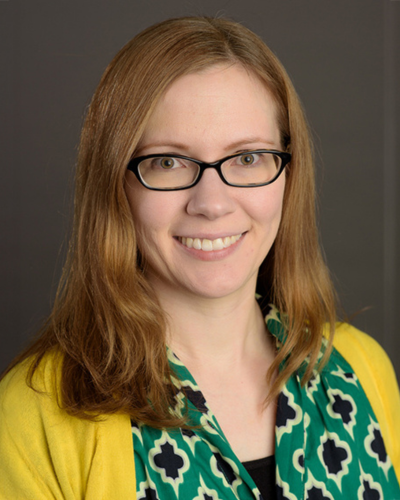
Jennifer Cole, PhD
Associate Professor of Instruction , McCormick School of Engineering
Assistant Chair of Chemical and Biological Engineering
Director of Northwestern Center for Engineering Education Research
By Lina Eskew, Senior Assistant Director of Assessment
In mid-February, I had the pleasure of speaking with Jennifer Cole about how meaningful and sustainable approaches to assessing student learning contribute to the culture of assessment at Northwestern. Dr. Cole is an Associate Professor of Instruction and Assistant Chair of Chemical and Biological Engineering as well as Director of the Northwestern Center for Engineering Education. Her work has been recognized for advancing equity in engineering education, innovative teaching strategies, and mentorship for both students and faculty.
When I joined the Searle Center in 2022, one of my first goals was to learn from colleagues who had built sustainable, systematic approaches to assessing student learning. Repeatedly, Dr. Cole’s name surfaced as one of the colleagues leading this work. Dr. Cole generously walked me through McCormick’s exemplary approach to assessment, demonstrating how a learning-outcomes-aligned assessment system can maintain rigor while remaining authentic to what matters in centering student learning.
In 2023, she helped to showcase McCormick’s systematized assessment model to the Assessment and Accreditation Council in 2023, where representatives from across Northwestern’s curricular and co-curricular units were eager to learn more about best practices in assessment.
Today, I am grateful to collaborate with Dr. Cole on a project evaluating proposed changes to the first-year engineering curriculum. Together with other engineering colleagues, we designed a student self-efficacy survey to measure students’ confidence in their ability to succeed in engineering tasks and navigate the challenges of their coursework. The survey will establish a baseline and help us understand how these curricular changes may affect incoming students.
In the conversation that follows, Jennifer reflects on how sustainable assessment systems develop over time, how faculty engagement helps build a culture of assessment, and why incorporating student perspectives is essential for advancing rigorous and equitable approaches to assessing learning and curricular change.
Many programs engage in assessment activities, but fewer build sustainable systems. In your role, how have you helped transform assessment from isolated efforts into an intentional system aligned with student learning outcomes?
In engineering, our work is guided by ABET accreditation standards, which require programs to measure and assess student outcomes. Fortunately, when I arrived at Northwestern, the chemical engineering program already had a strong foundation in place.
There was a curriculum map that connected our core courses to ABET student outcomes and organized the curriculum into course sequences across the sophomore and junior years. This structure made it much easier to see how courses connect and how learning develops across the program. Because that foundation already existed, building an assessment system became far more manageable, and we were not starting from scratch.
Every five or six years, we revisit the curriculum map and ask whether anything has evolved. Have courses changed? Are the outcomes still aligned with what we expect students to learn? These regular reviews help keep the system current and meaningful.
Another important step was developing shared rubrics aligned with each ABET student learning outcome. These rubrics can be used across multiple courses and describe student performance in terms of developmental stages, including novice, intermediate, and the level expected of graduating engineers. This approach helps faculty focus less on grades and more on how students demonstrate learning as they progress through the program.
What has been most powerful in motivating faculty to see themselves as contributors to this system?
One important strategy has been to keep the process low burden for faculty. Rather than asking instructors to design entirely new assignments specifically for program assessment, we encourage them to use existing student work, such as projects, exams, written reports, or homework sets, and apply the relevant learning outcome rubric to assess how students are demonstrating the learning outcome.
For some rubrics, it typically makes the most sense to apply them at the end of the program, but some can be applied multiple times across the program. It really depends on the learning outcome we are trying to assess. The goal is to use them both formatively and summatively whenever possible.
Assessment practices are also embedded in our annual departmental “convergence meeting” for the undergraduate program. During this meeting, faculty review a range of information about how students are doing across the program. This includes rubric results, feedback from student town halls, survey data from the Senior Exit Survey and other relevant insights we may gather from other assessment instruments. By bringing these inputs together, faculty can step back and ask: What are we learning about our students and our curriculum?
Sometimes the discussion leads to recommendations for changes. Other times it confirms that things are working well. Either way, these conversations reinforce the idea that assessment is part of collective reflection and improvement, rather than simply a compliance requirement.
Last but not least, many faculty in our programs develop a mindset focused on improving their teaching. Many participate in Searle’s learning and teaching programs, such as the Searle Fellows Program, where they are encouraged to seek and use feedback to better understand what is working in their courses and what could be improved. Faculty often carry this mindset beyond their individual classrooms and into the broader program, recognizing the connections between course-level practices, program learning outcomes, and the overall student learning experience.
Engineering education often emphasizes measurable competencies directly assessed by faculty. You are also exploring more ways to incorporate student voice. What inspired you to do so?
When we began discussing potential changes to the first-year engineering curriculum, we realized that many of our conversations focused on what students could or could not do academically. At the same time, people frequently referenced student feedback as one of the reasons for considering curricular changes. Yet we did not actually have systematic data about how students were experiencing the program.
That realization led to the development of a survey focused on student self-efficacy, belonging, and support networks. We wanted to better understand whether students feel confident navigating engineering coursework, whether they feel they belong in the field, and what types of support systems they rely on.
These factors matter. A student may technically be progressing through the curriculum, but if they feel uncertain about their abilities or disconnected from their peers, that experience can shape their engagement and persistence in the program.
We are administering this student survey to capture a baseline before the curricular changes and once after the changes to assess whether we are moving in the right direction. However, I also think it would be valuable to continue using it in the future. It does not necessarily have to be administered every year, but it would be great to think about ways in which we can embed some of these questions into existing surveys, such as the Northwestern Enrolled Student Survey.
Incorporating student voice allows us to better understand the lived experience of learning engineering, not just the learning outcomes measured through coursework.
Your department is implementing changes to the first-year engineering curriculum. What prompted that shift?
For many years, engineering students completed a four-course sequence called Engineering Analysis, which covered topics such as linear algebra, statics and dynamics, programming, and differential equations. Over time, faculty noticed that more students were dropping or delaying courses in the sequence, often because they felt unprepared or did not have the necessary mathematical preparation.
The number of students experiencing these challenges continued to grow, suggesting that the sequence was not working as intended. At the same time, not every engineering major found that all the courses aligned with their specific disciplinary needs. These patterns prompted faculty to reconsider how the first-year experience was structured.
The proposed new curriculum focuses on three areas as a common foundation for first-year students: programming, probability and statistics, and linear algebra. Students will still encounter these subjects early in their studies, but the timing may vary depending on their level of math preparation. For example, all students will be invited to take programming in the first quarter of their first year, while probability and statistics may occur later in the year for students who need additional time to build mathematical readiness. This approach is intended to give students greater flexibility and a stronger opportunity for success.
However, it is worth noting that these changes may also alter aspects of the traditional engineering cohort model, which has long supported community building among students. This is another reason the survey will be valuable. It will help us understand how students experience the new structure and whether additional supports may be needed.
As the revised first-year engineering curriculum is implemented in Fall 2026, systematically examining assessment data and incorporating student feedback will help the program understand how students experience the new structure. These efforts illustrate how assessment can move beyond compliance to support evidence-informed improvement and how a culture of assessment grounded in rigor and equity can guide meaningful curricular change.
Published April 7, 2026