Generative AI

In the openings that emerge from disruptions, we see instructors demonstrating remarkable care and agility. As their thought partners, we approach generative AI with curiosity combined with the recognition that the specific learning and teaching contexts shape how the consequences of using AI are weighed. As part of the Searle Center’s commitment to humanizing pedagogy, we define responsible AI use as carefully considered efforts to enhance learning and teaching while preserving instructor vitality and essential human interaction that fosters students' critical thinking and deeper learning.
Read our FULL POSITION statement on Generative AI
Current Conversations
As AI becomes increasingly integrated into learning and teaching in higher education, instructors are navigating complex questions around academic integrity and student learning. While many emerging policies emphasize detection and sanctions, this 3-part series on pedagogy and AI offers a proactive alternative by centering trust, transparency, reflection, and student agency. Each of these In Brief Learning & Teaching Guides offers scalable entry points—from quick additions to existing assignments to deeper collaborations with students on ethical AI use, including estimated times for instructors to implement ideas and strategies.
Critical Thinking & GAI in Course Delivery
Inviting students to critically engage with AI is a method for developing broader analytical skills and modeling professional practice to prepare students for meaningful engagement within and beyond the classroom.Explore the GuideIterative Revision & GAI in Course Design
Iterative revision reduces students’ misuse or over-reliance on AI by emphasizing process over product. When assignments include drafts, feedback loops, and scaffolding, instructors minimize the need to use AI as a shortcut to more polished work.Explore the GuideMetacognition & GAI in Course Assessment
When students are asked to rigorously reflect on how they arrive at an answer—not just what the answer is—they can engage authentically and are less likely to outsource their work to AI.Explore the GuideContribute to the GAI Conversation
If you’ve integrated AI into your course in ways that support student learning, growth, or engagement, we’d love to hear from you as part of our ongoing effort to showcase authentic examples from Northwestern instructors.Share Your Innovative TeachingReflecting on AI in Teaching and Learning
We invite instructors to reflect on the pedagogical possibilities and ethical implications of using AI to promote alignment between technology, values, and learning outcomes. We have included a list of reflection questions organized by focus area to guide this process.
Reflection Questions
Pedagogy
- What are my pedagogical values around emerging technologies like AI, and how does AI align or conflict with my teaching philosophy?
- Where am I willing or unwilling to experiment with using AI in learning and teaching?
- How does AI use align or conflict with my overall vision for how students should reach learning goals?
- Am I using AI in ways that support—and not replace—my professional judgment and creativity?
Course Design
- To what extent does AI enhance or diminish my course content (e.g., activities, assignments, assessments)?
- To what extent does AI use conflict or align with established learning outcomes?
- Which framework(s) for AI use would work well in my course?
- Closed (AI does not support the learning outcomes)
- Conditional (AI use permitted with boundaries)
- Open (AI use is permitted)
Course Delivery
- How might I use AI to personalize learning experiences for my students (e.g., adapted content, dynamic feedback)?
- In what ways can AI tools reduce or increase my cognitive or administrative workload?
- What are the challenges (e.g., structural barriers, pay walls) and opportunities (e.g., assistive tools, language support) of AI use around accessibility and inclusion?
- To what extent does the use of AI in the classroom spark—or potentially disrupt—student motivation, engagement, creativity and interpersonal connection?
Assessment and Curricular Change
- Am I clearly communicating why AI use is permitted or prohibited in my syllabus?
- What strategies can I use to design assessments that counteract AI misuse?
- How can I use AI to increase the clarity of assignment rubrics and decrease unspoken or assumed expectations?
- Could AI help departments/programs in the curriculum mapping process (e.g.,mapping learning outcomes, visualizing curriculum coverage, identifying gaps or redundancies)?
Community and Vitality
- What are some effective ways to spark dialogue with colleagues about the ethical implications of AI in our field and to develop shared guidelines or resources?
- How can I collaborate with colleagues to exchange insights, strategies, and obstacles related to AI integration?
- Where do I currently stand emotionally and intellectually when it comes to AI?
- What support do I need to feel confident integrating AI into my teaching?
Scholarship of Teaching and Learning (SoTL)
- What are my current knowledge and skill levels with using AI?
- What is my current assessment of the strengths, weaknesses, opportunities, and threats (SWOT) of using AI in learning and teaching?
- How familiar am I in the current literature on AI in my disciplinary context?
- What unique perspectives or experiences could I contribute to the growing SoTL conversation by turning my curiosity about AI into a SoTL project or publication?
"Preparing Students for Life Beyond College: Embracing AI as Essential Learning"
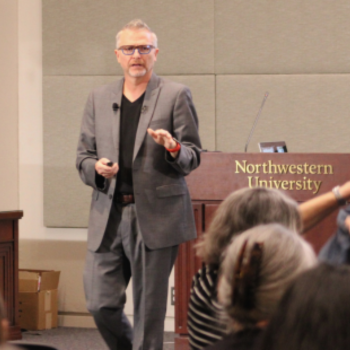
C. Edward Watson, co-author of Teaching with AI: A Practical Guide to a New Era of Human Learning (2024), delivers an innovative and nuanced keynote address on generative in higher education. Available to Northwestern community members with credentials. Watch now.